Loading...
Serving Fort Walton Beach, FL and surrounding areas. (850) 904-1051
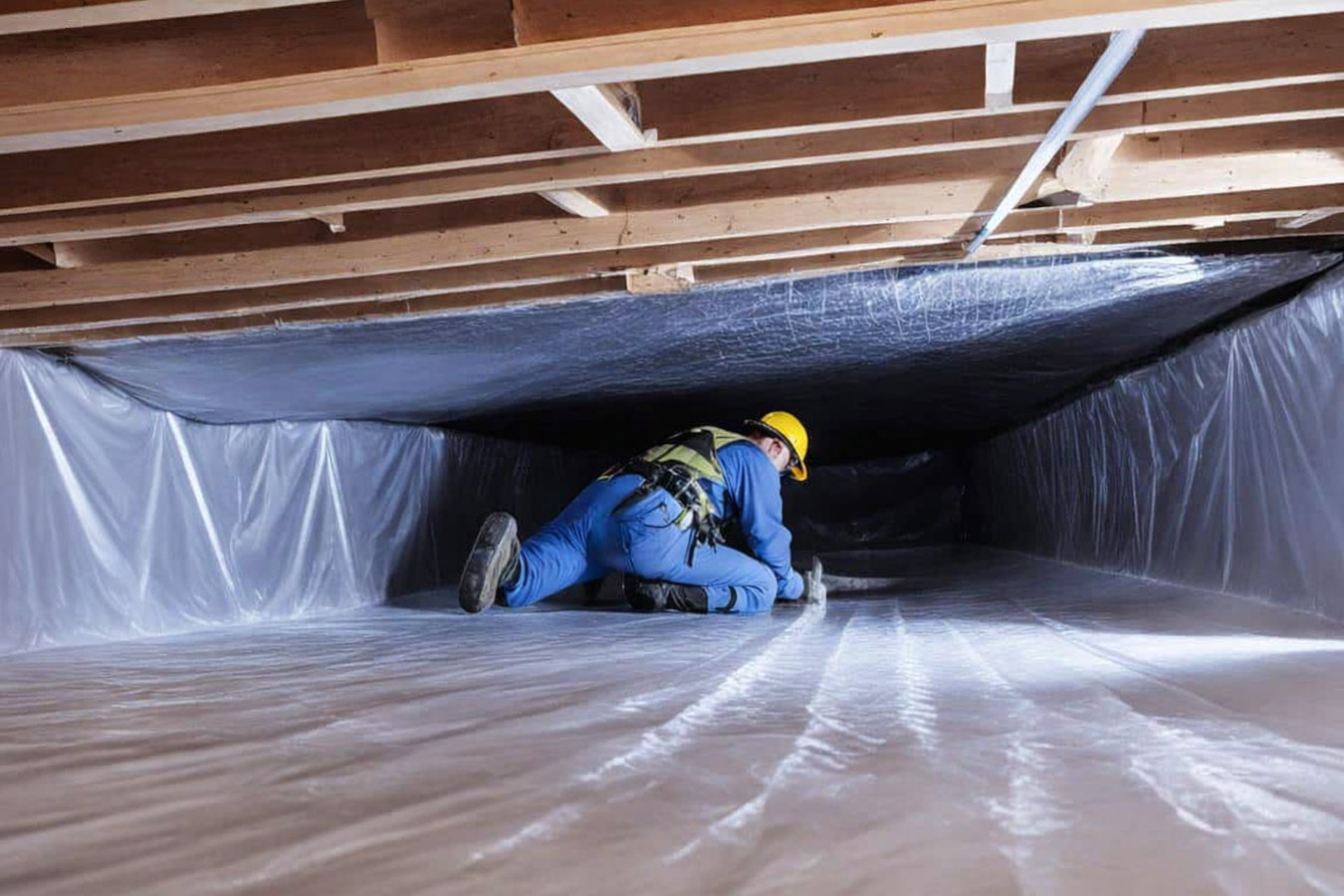
Ground moisture is moving up through your crawl space right now. A properly installed vapor barrier, sealed at every seam, stops it before it reaches your floors, framing, and indoor air.
Vapor barrier installation in Fort Walton Beach lays thick reinforced plastic across the crawl space floor - and often the walls - with seams overlapped and taped so no moisture can find a way through, with most residential jobs completed in one to two days.
Think of it as a raincoat for the underside of your house. Without it, the warm, wet ground beneath Fort Walton Beach homes releases moisture upward every single day - into your floor joists, insulation, and eventually your living space. The consequences build slowly: soft floors, musty smells, energy bills that keep climbing, and framing that quietly weakens.
If your home already has a crawl space but lacks moisture protection, adding a crawl space vapor barrier is often the single most effective step you can take. Pairing it with attic air sealing addresses moisture entry points from below and air leaks from above at the same time.
If hardwood or laminate floors have started to feel bouncy or spongy in spots, the wood framing underneath has likely been absorbing moisture for a while. In Fort Walton Beach's humid climate, this can happen gradually over years without any single dramatic event. Worth investigating before the damage spreads.
A persistent musty odor in rooms over the crawl space is one of the clearest signals that moisture is moving up from below. In a coastal climate, that smell can be easy to dismiss as just Florida air - but it often means mold or mildew is growing somewhere in the crawl space. If the smell gets worse after rain or on humid days, act on it.
A damp crawl space means wet insulation, and wet insulation does not keep your home cool. Your AC ends up working harder - and in a Fort Walton Beach summer, that is already a heavy load. If your cooling costs have gone up without an obvious cause, the crawl space is the first place to check.
Water droplets on pipes, puddles on the ground, or old plastic sheeting that has turned dark and torn are direct signs of an active moisture problem. Many Fort Walton Beach homes have original sheeting from decades ago that offers almost no protection. Even a quick look through the access hatch with a flashlight tells you a lot.
We install vapor barriers for crawl spaces across Fort Walton Beach, from straightforward ground-cover liner replacements to full encapsulation systems that seal the walls, vents, and ceiling as well. Every installation begins with a physical inspection of the current space - checking existing moisture levels, any standing water, old liner condition, and the height of the crawl space. If there is debris or deteriorated sheeting to remove first, we handle that before any new material goes down.
We use reinforced liner material - typically 10 to 20 mils thick - with seams overlapped by at least 12 inches and taped at every joint. The liner runs up the foundation walls and is secured so it cannot shift over time. For homes that need more than a basic liner, we also offer full crawl space vapor barrier encapsulation with vent sealing and dehumidifier installation. When a permit is required through Okaloosa County, we pull it and coordinate the inspection for you.
Best for homes with existing deteriorated plastic that needs to be removed and replaced with a properly sealed, thick liner.
Ideal for homes with bare dirt crawl space floors that have never had any moisture protection installed.
For homes with persistent moisture problems - adds wall coverage, vent sealing, and a dehumidifier to the standard ground liner.
For Fort Walton Beach homeowners who have had water intrusion after a tropical storm and need to assess or repair an existing barrier.
Fort Walton Beach sits on the Gulf Coast, where average relative humidity stays above 70 percent for most of the year and summer afternoons regularly push past 90 percent. The sandy coastal soil in Okaloosa County sits close to sea level, and the water table in parts of the area can be surprisingly shallow. That means the ground under your crawl space may stay damp even during dry stretches - and after heavy rain events, which are common here from May through October, that moisture has nowhere to drain quickly. We work throughout the area, including communities like Mary Esther, FL and Destin, FL, where older housing stock and coastal soil conditions create the same underlying challenges as Fort Walton Beach proper.
A significant portion of Fort Walton Beach's neighborhoods were developed in the 1960s through 1980s, when crawl space moisture protection was minimal by today's standards. Many of those homes have thin, deteriorating plastic sheeting - or nothing at all - under the floor. Florida's statewide building code sets specific requirements for how crawl spaces must be moisture-protected, and Okaloosa County enforces those standards locally. A contractor who pulls the proper permit is one who is willing to have their work checked - a meaningful quality signal. The U.S. Department of Energy's guidance on crawl space moisture identifies conditioned, sealed crawl spaces as the best practice for humid climates like Florida's Gulf Coast.
We ask about your home's size, any moisture signs you have noticed, and whether you know what is currently in the crawl space. You will hear back within one business day to schedule the assessment visit.
A technician physically inspects the crawl space - checking the current liner condition, moisture levels, the height of the space, and any signs of standing water, mold, or damaged framing. This visit typically takes 30 to 60 minutes.
You receive a written estimate covering materials, labor, and whether a permit is required. If a permit is needed for your specific project, we handle the paperwork. Take your time reviewing it before agreeing to anything.
The crew works entirely under your home. Most jobs are complete in one to two days. Before leaving, we show you photos of the finished installation and explain how to check that things are staying dry going forward.
Free crawl space assessment. Written estimate before any work begins. No pressure.
(850) 904-1051We install 10 to 20 mil reinforced liner with seams overlapped by at least 12 inches and taped at every joint. The liner is secured to foundation walls so it cannot shift. These are the specific details that determine whether a barrier lasts 15 years or fails in five.
Sandy soil, a shallow water table in low-lying neighborhoods, and decades-old vented crawl spaces are common patterns across Fort Walton Beach. We know what typical moisture damage looks like here and what solutions actually hold up in this climate.
We document the crawl space condition at the start and walk you through photos of the finished installation. You will see exactly what we found and what we did about it - not just take our word for it.
Our experienced local crews handle this work across Fort Walton Beach every week. When a permit is required, we pull it and coordinate the Okaloosa County inspection on your behalf, then hand over documentation of the finished work.
The difference between vapor barrier installation that protects your home for 20 years and one that fails quietly comes down to material thickness, seam sealing, and whether the contractor secured the liner properly at the edges. Those are the standards we hold ourselves to on every job we complete.
For more on what good crawl space moisture control looks like in humid climates, the Building Science Corporation provides authoritative research on crawl space encapsulation and vapor management best practices.
Seal air leaks in your attic to stop conditioned air from escaping and unconditioned air from entering your living space.
Learn MoreLearn more about crawl space vapor barrier options - from ground liners to full encapsulation systems - for Fort Walton Beach homes.
Learn MoreGulf Coast moisture does not take a break. The sooner your vapor barrier is installed, the sooner your floors, framing, and air quality are protected. Call now or get a free estimate.