Loading...
Serving Fort Walton Beach, FL and surrounding areas. (850) 904-1051
Your attic is where most of your cooled air escapes - and where Florida's summer heat pushes back in. The right insulation stops that cycle and makes every room in your home livable again.
Attic insulation in Fort Walton Beach acts as a thermal blanket between your living space and the intense heat above - and most residential jobs are completed in four to six hours without requiring you to leave your home.
Without adequate insulation above your ceiling, your air conditioner is fighting a wall of trapped heat every afternoon from April through October. That shows up on your electric bill and in rooms that never quite reach a comfortable temperature. The Florida Panhandle has no real off-season when your attic gets a break - which means any gap in your insulation costs you money every single day of the year.
Attic insulation pairs naturally with blown-in insulation and attic air sealing - many homeowners get the best results by addressing both the insulation level and the air leaks at the same time. According to ENERGY STAR, combining insulation with air sealing delivers significantly better results than either approach alone.
If your cooling costs have crept up year over year, your attic insulation may be the reason. In Fort Walton Beach, where air conditioning runs from March through November, a poorly insulated attic can add hundreds of dollars a year to your energy costs. If neighbors in similar-sized homes are paying noticeably less, that gap is worth investigating.
When one bedroom or the back of the house stays stuffy no matter how long the AC runs, heat is usually getting in from above. This is especially common in Fort Walton Beach homes built before the 1990s, where attic insulation may be thin, uneven, or missing in spots. The thermostat might say 74 degrees, but a room under a poorly insulated roof section can feel like 80.
If you peek into your attic and can clearly see the wooden beams running across the floor, your insulation is too thin. Proper insulation should be deep enough to cover those beams completely and then some. This is a quick visual check anyone can do from the attic hatch without stepping inside.
In the humid Gulf Coast climate, moisture can work its way into an attic through small gaps, condensation, or a slow roof leak. When insulation gets wet, it stops working and can start to smell. If you have noticed a musty odor in your home or seen water stains on your ceiling, the attic is one of the first places to check.
Blown-in insulation is the most widely used option for Florida attics because it fills gaps and irregular spaces better than rigid batts - settling into every corner around joists, wiring, and ductwork. That complete coverage matters in a hot, humid climate where any gap becomes a heat pathway. Before adding new material, we always assess the condition of what is already there. If old insulation is damaged, moisture-compromised, or harboring pests, we recommend removal first - layering new insulation over a compromised base creates problems down the road. We also pair insulation upgrades with attic air sealing when gaps around light fixtures, pipes, and wiring are part of the problem.
For homes where moisture control is a primary concern - a common situation near the Gulf - we may recommend spray foam in specific areas of the attic as part of a complete solution. We will walk through the options with you and explain the trade-offs before any work begins. If your home also has wall or crawl space concerns, see our blown-in insulation service for how we approach those areas.
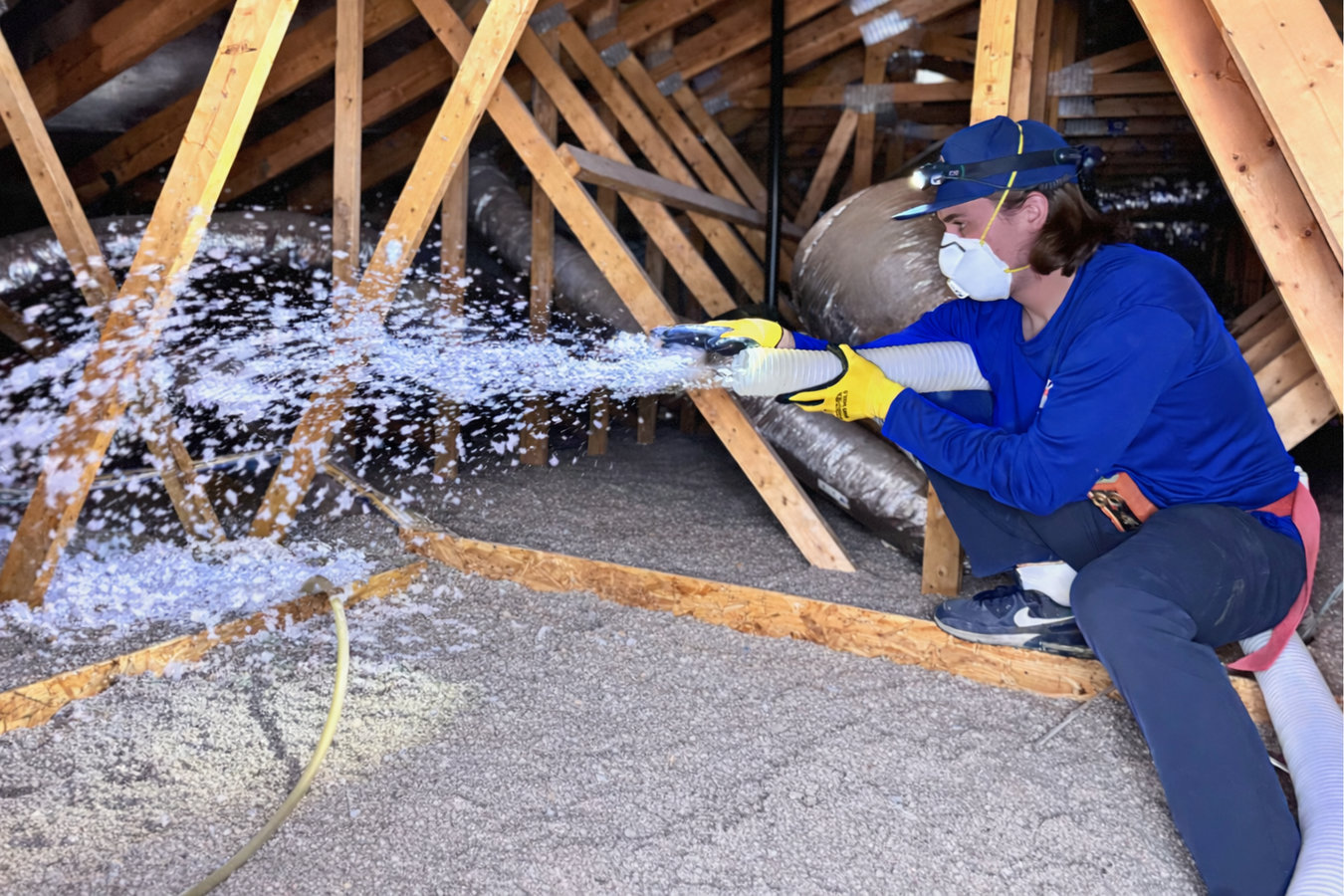
The most common choice for Florida attics - loose material blown into place with a hose fills every corner evenly and works well in attics with irregular shapes, existing wiring, and ductwork running through them.
Sealing gaps around recessed lights, pipes, and penetrations before adding insulation - a step many contractors skip, but one that makes a significant difference in how well the finished job performs.
Fort Walton Beach sits in the Florida Panhandle, where summer heat arrives early and lingers late. Unlike most of the country, there is no real window of mild weather where your attic cools down and gives your air conditioner a break. The Gulf of Mexico is minutes away, and the air carries both moisture and salt year-round. That combination accelerates wear on building materials and creates conditions where mold can take hold quickly if insulation gets damp. Moisture assessment is not optional here - it is a necessary part of any responsible attic insulation job.
Many Fort Walton Beach homes were built in the 1960s through 1980s, when insulation standards were far lower than they are today. If your home is more than 30 years old and has never had an insulation upgrade, the original material has likely compressed, shifted, or degraded. We regularly work on homes in this situation throughout the area, including communities like Shalimar and Mary Esther, where homes from that era are common.
When you reach out, we ask a few basic questions - your home's square footage, the age of the house, and whether you have noticed specific problems like high bills or uneven cooling. We can usually schedule an in-home assessment within a few days. All inquiries get a reply within 1 business day.
A contractor comes to your home and physically inspects the attic - checking how much insulation is currently there, whether it is in good condition, and whether there are moisture issues or air leaks to address first. This visit takes 30 to 45 minutes, and we will show you photos of what we find before recommending any work.
After the assessment you receive a written quote that breaks down exactly what work is being proposed and what it costs. This includes whether old insulation needs to be removed, whether air sealing is part of the scope, and what the final depth of new insulation will be. Every line item is explained - no guessing.
The crew sets up equipment, runs the hose up to the attic, and blows insulation material into place. For most homes this takes four to six hours, and you can walk through the result with us at the end. Your home is ready to use immediately - no curing time required.
A quick call or form submission is all it takes to schedule your free attic assessment. We give you a written quote after a real inspection - not a number over the phone. We reply within 1 business day.
(850) 904-1051Adding insulation over a moisture problem makes it worse. Before we install anything, we check for signs of condensation, small roof leaks, or inadequate ventilation. If we find a problem, we tell you upfront and explain what needs to happen first.
Our crews work on Fort Walton Beach attics every week and know how heat and humidity move through a Panhandle home. We pull permits when required and coordinate the county inspection, so you get documented work on file.
We have worked on homes throughout Fort Walton Beach and Okaloosa County for years - from older concrete block houses near downtown to newer construction closer to Niceville and Navarre. We know what the Gulf Coast climate does to homes over time.
You will receive a written quote after a real in-home inspection - not a number over the phone. The estimate includes removal if needed, air sealing if recommended, and the final insulation depth. What the estimate says is what you pay.
We bring real local knowledge to every job. You will know what is in your attic, what we recommend, and exactly what it costs before we start. Any qualified attic insulation contractor should give you a written estimate and documented work - ask for both before you book. The ENERGY STAR program provides the benchmarks we use to evaluate whether an attic insulation project is delivering what it should - and we are happy to walk you through those standards on your job.
Loose-fill insulation blown into walls and floors fills gaps that batts miss - a complementary option when your attic project is complete and other areas of your home still need attention.
Learn MoreSealing the gaps around penetrations and fixtures before adding insulation - the step that separates a good attic job from one that truly performs in Florida's heat and humidity.
Learn MoreFort Walton Beach summers don't wait - lock in your installation date now and start seeing the difference on your electric bill before the worst of the heat arrives.